The Gravity of a Small City
The Gravity of a Small City
Growing up in York, Pennsylvania, and the generations of Black Americans whose lives shaped it.
I grew up in a small city sitting on the state line between Pennsylvania and Maryland. There was nothing grandiose about it. It was a factory town. A manufacturing town. The kind of place where families lived in the same homes for generations and the rhythm of life rarely changed.
As a kid, life felt simple. I went to school, played outside, and moved through the same routines most of the people around me did. The city felt contained, almost insulated from the chaos of the larger world.
Looking back now, I sometimes think of the place as a kind of black hole. Not something destructive, but something with gravity. A place that held people, memories, and generations in the same orbit.
York, Pennsylvania has always been small. Even today, the population hovers around forty-five thousand people.
My father, a barber, and my mother, a factory worker, provided a stable home — a place where even as adults we can return. From grandparents to aunts, uncles, and cousins, I’ve always been surrounded by the Black American community, a foundation of my identity.
Summers were hot and winters were cold. We had block parties and carnivals in the park. It wasn’t uncommon to be sitting on a family member’s porch, whether for a cookout or just to hang. From the church scene to the club scene, my environment has always been rooted.
Recently, during a conversation with a friend, I realized something. I don’t really tell stories about my childhood.
To me, my childhood was unproblematic. I grew up on the same block from preschool through high school graduation. We played in the street, in parking lots, or at the park. The rule was simple: make it home before the street lights came on.
Once those lights came on, it was time to be on the block. We played hide-and-seek, tag, bull rush, and whatever else we could come up with. Some nights we were at the skating rink. Other nights we were at a high school basketball or football game.
For a long time, I felt like these stories were stereotypical of a Black American household, so I rarely spoke about them. But I’m learning that everyone’s story contributes a verse to the larger tapestry of Black American society.
One interesting thing about my hometown is the longevity of the Black American presence here in York, Pennsylvania. Because of the nature of America’s history, my hometown found itself connected to pivotal moments in the nation’s past.
York, one of the first towns just north of the Mason-Dixon Line, became a hub for free Black people and for those fleeing slavery. It’s known that York and the rest of South Central Pennsylvania contained many corridors of the Underground Railroad — some documented and others lost to time.
By the time of the Civil War, the Black population in South Central Pennsylvania was steadily growing. However, during the war York itself was occupied by Confederate forces. To prevent the town from being burned, residents negotiated and paid a ransom.
During this time, because Confederate soldiers were known to capture and enslave free Black people, many Black residents fled deeper into the Susquehanna Valley or east toward Philadelphia. When the war ended, many eventually returned to York, including Civil War veterans.
York — a corridor to the North — was certainly no stranger to racial bias. Though the town sits in a Northern state, segregation still played out in everyday life.
One example of this can be seen in where Black residents could be buried.
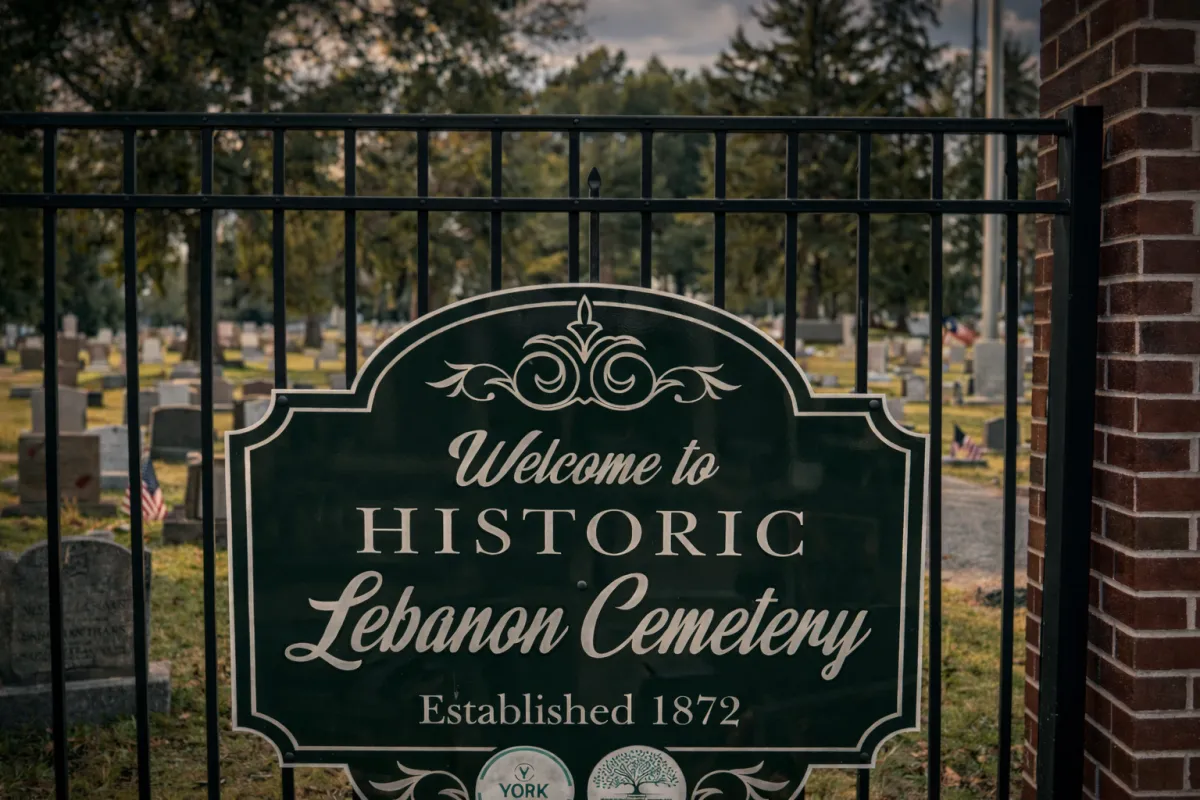
Lebanon Cemetery, established in 1872, became the place where the Black community could honor its ancestors and bury loved ones. Today there are even Black American Civil War veterans buried there.
Lebanon Cemetery stands as a testament to the story of Black Americans in York. For more than a century there has been a steady Black American presence here.
York was an industrial hub, and many Black Americans seeking work and better opportunities eventually found their way here, contributing to the already established community.
To this day, my aunts and uncles never forget to recount how they attended segregated schools. That’s right — in the 1950s and even into the early 1960s, segregation was not limited to the South.
Today I went to visit my grandfather’s grave in Lebanon Cemetery, something I haven’t done in a long time. While walking through and reading the names of those buried there. I had a sense of belonging, I seen a story unfolding, so many lives lived. Walking up to where my grandfather (Pop Pop), lay, I felt a familiarity. Reading the tombstones and recounting times sitting in Pop Pop’s house, emotions rose. I smiled and found myself updating him and those around him. Nanny, Aunt Jacky, Aunt Ona. All of them, I just spoke of the things I’ve done and where I was going in life and requested they continue to watch over me.
The cemetery is filled with so many unique headstones all telling a story. It was nostalgic and comforting, with the feeling of walking on hollowed ground. I felt the legacy on the grounds and a sense of wanting to do my part so when I lay to rest there is something to be said.
Lebanon Cemetery was more than a burial ground. It became a place where the Black community preserved its dignity during an era when many institutions excluded us. Fraternal organizations, churches, and families all contributed to maintaining the cemetery. The gravestones themselves tell a story — symbols of lodges, church affiliations, and generations of families who built lives here.
Lebanon Cemetery tells two stories at once. The first is the story of the Black Americans who established it in 1872 during a time when segregation dictated where we could even be laid to rest. Families, churches, and fraternal organizations created a sacred place where the community could honor its dead with dignity. Generations of York’s Black residents—laborers, church leaders, Civil War veterans, and families who built lives in this city—were buried there. The second story belongs to the present. For many years the cemetery fell into neglect, nearly forgotten as the city around it changed. But in recent decades, community members and preservationists have begun restoring it, reclaiming a piece of history that had been allowed to fade. In that way, Lebanon Cemetery stands not only as a resting place for the past, but also as a reminder that history must be remembered and cared for by the generations who follow.
Walking through Lebanon Cemetery, I couldn’t help but think about the continuity of Black American life in York. Generations of families built lives here, raised children here, and laid their loved ones to rest here. The cemetery is physical proof that the Black American presence in this city stretches back well over a century. But when you look around York today, you can also see that the city itself has changed. The population remains roughly the same size it has been for decades, yet the makeup of the people who live here has shifted in ways that many residents have quietly observed.
York’s population has hovered around forty-something thousand people for most of my life. In many ways the city still feels small and familiar. But the demographics of the city have changed dramatically over the past few decades. When I was growing up, the community I was surrounded by was overwhelmingly Black American and white working-class families who had lived here for generations. Today the city reflects a much more complex mix of cultures and backgrounds. This change isn’t unique to York; it has happened across many small industrial cities in America.
I watched these changes unfold over time as more people from different parts of the world began moving into the area. In many ways, the demographic shifts happening in York mirror the larger story of America itself. As cities change, so do the ways we talk about identity, community, and history.
One place where this becomes especially noticeable is in how demographic data is categorized. In the United States, the category “Black” often groups together people from very different historical and cultural backgrounds. Black Americans whose families have lived in this country for centuries are often counted in the same statistical category as immigrants arriving from Africa, the Caribbean, or other parts of the world.
While we may share certain physical characteristics, our historical experiences are not identical.
This is where the idea of disaggregation becomes important. Disaggregation simply means breaking broad categories down into their distinct components so that the unique histories and needs of different groups can be understood more clearly.
For communities like the one that built lives in York generations ago—the same families whose names are carved into the stones at Lebanon Cemetery—this distinction matters. The Black American experience in places like York is tied to a very specific historical path: from slavery and the Underground Railroad, through segregation, into the industrial towns that many of our families helped build.
When all of those histories are compressed into a single broad category, the ability to understand how resources should be allocated or how communities developed over time becomes blurred.
Recognizing those distinctions isn’t about exclusion. It’s about historical clarity. It’s about acknowledging that the Black American story, particularly in places like York, has roots that stretch back generations and deserve to be understood in their own context.
Standing there among the graves, it became clear to me why lineage and historical clarity matter. The people buried here represent generations of Black Americans whose lives were shaped by the unique history of this country — from slavery and the Underground Railroad to segregation and the industrial towns that many of our families helped build. Today, as cities change and new communities arrive, conversations about identity often become simplified into broad categories. But places like Lebanon Cemetery remind us that not every story within those categories began the same way. For many of us, identifying as Foundational Black American is simply a way of recognizing that lineage — a way of demarcating a history that stretches back generations in this land, long before the demographic shifts of the present day.
Standing in Lebanon Cemetery earlier that day, reading the names etched into the stones, I was reminded that history is not abstract. It is personal. The generations buried there lived through the very moments that shaped the Black American experience in this country. Their presence in York stretches back well over a century, long before many of the demographic changes we see today.
In that sense, the cemetery is more than a place of rest. It is a reminder of the foundation that was laid long before us, and of the responsibility each generation carries to remember where that foundation came from.
E. L. Williams
